
The Ultimate Privacy Guide to Cars in 2026 — How to Avoid Surveillance on Wheels
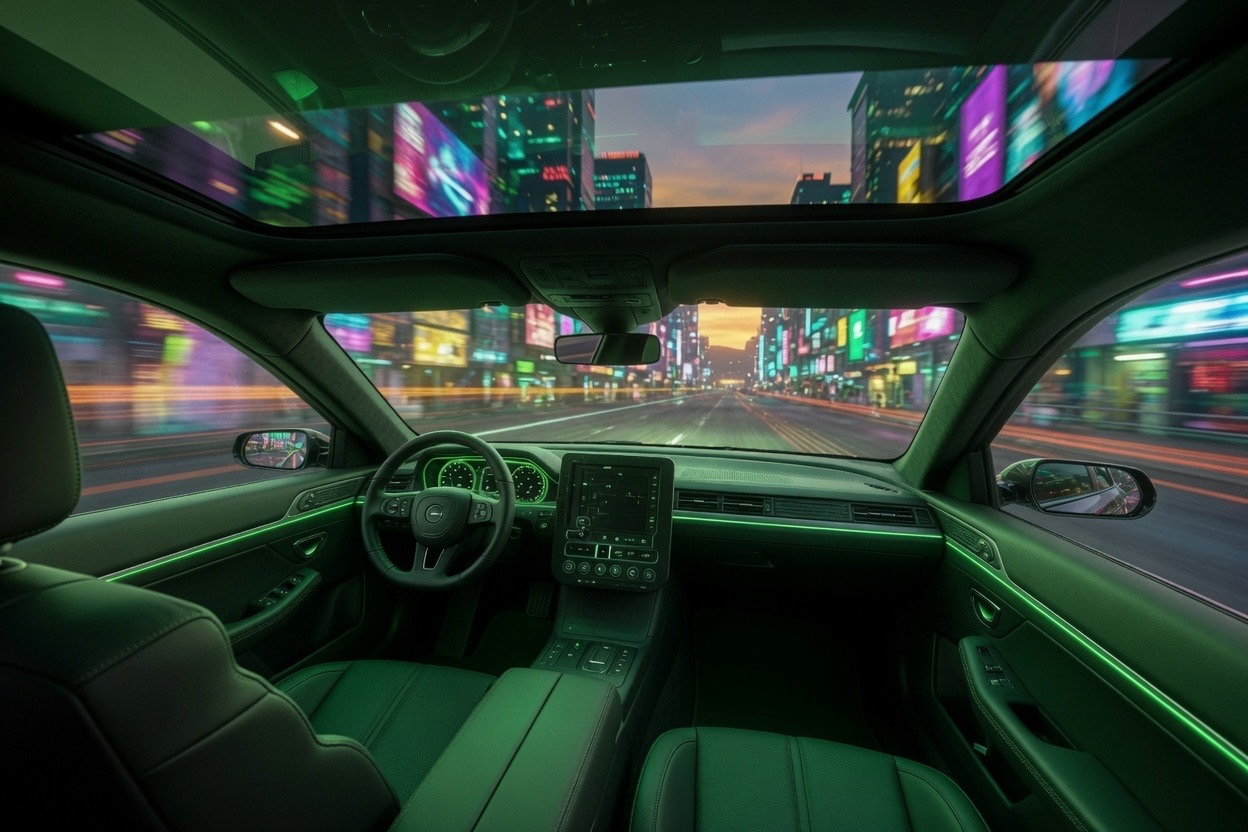
Modern cars are no longer just transportation — they are networked surveillance platforms with GPS tracking, always-on microphones, cameras, and cellular modems that report your every move to manufacturers, insurers, and data brokers. This guide covers exactly which brands collect what, how to legally disable tracking in the EU, and which cars are the best and worst for privacy in 2026.
1. The Problem: Your Car Is a Rolling Spy Device
Modern vehicles are data-hungry machines. They collect:
- Real-time GPS location shared with manufacturers, insurers, and third parties.
- Audio recordings via always-on microphones for voice commands, which often continue recording after activation.
- Driving behavior such as speed, braking, and acceleration used for insurance scoring and advertising.
- Biometric data including weight, seatbelt usage, and even heart rate in some luxury models.
- In-cabin video — Tesla, BMW, and Mercedes already test interior cameras; GM's Ultra Cruise uses them to monitor driver attention.
Why it matters:
- No opt-out by default. Most manufacturers do not ask for explicit consent — data collection is buried in terms of service you agree to when using infotainment systems.
- Data is sold or leaked. In 2023, General Motors was caught selling detailed driving data (speed, location, seatbelt use) to insurers and brokers. Tesla shares data with government agencies upon request.
- Hackable by design. In 2025, researchers remotely disabled a Jeep's brakes via its Uconnect system. BMW, Mercedes, and Audi have all had vulnerabilities allowing GPS spoofing and microphone eavesdropping.
Legal loopholes:
- EU's eCall mandate (2018) forces all new cars to have GPS and cellular connectivity for emergency calls. This cannot be disabled legally.
- GDPR applies, but manufacturers exploit legitimate interest clauses to collect data without consent. Toyota and Ford are the only major brands offering granular opt-outs.
2. Privacy Policies Deep Dive: Which Brands Let You Opt Out?
Verified from official documents (2024–2026).
Toyota — Safety Connect / Entune. Opt-out possible: [YES] full. Collects: location, speed, diagnostics. Data sharing: only with explicit consent (can be revoked).
Ford — FordPass / SYNC 4. Opt-out possible: [YES] partial. Collects: location, voice, driving habits. Data sharing: opt-out via settings (but some diagnostics remain).
Peugeot — Peugeot Connect. Opt-out possible: [NO] partial. Collects: location, voice, maintenance data. Data sharing: opt-out for marketing, but telematics cannot be fully disabled.
Volkswagen — We Connect. Opt-out possible: [NO]. Collects: location, driving style, voice. Data sharing: no opt-out (data used for service improvements).
BMW — ConnectedDrive. Opt-out possible: [NO]. Collects: location, camera feeds (in some models), voice. Data sharing: shared with third parties (Here Maps, insurance partners).
Tesla — Tesla Vision / Sentry. Opt-out possible: [NO]. Collects: always-on cameras, mics, GPS. Data sharing: shared with law enforcement upon request; used for AI training.
Mercedes — MBUX Infotainment. Opt-out possible: [NO]. Collects: location, voice, in-cabin camera (2026 models). Data sharing: no opt-out (data used for personalization).
Hyundai/Kia — Bluelink / UVO. Opt-out possible: [NO]. Collects: location, voice, diagnostics. Data sharing: shared with partners (Google, Amazon).
Key Takeaways:
- Only Toyota and Ford allow full or near-full opt-out of telematics data collection.
- Tesla, BMW, and Mercedes are the worst offenders — no opt-out, always-on tracking, and camera/microphone surveillance.
- Peugeot/Citroen (Stellantis) and Volkswagen allow partial opt-outs but still collect diagnostics and location data.
3. Legal Ways to Physically Remove Tracking Modules in the EU
Tested methods, compliant with EU law (2026).
What You CAN Do Legally
- Disable Telematics via Software. Toyota/Ford: go to Settings > Privacy > Data Sharing > Disable All. Peugeot/Citroen: Settings > Connectivity > Disable Remote Services (but eCall remains active). Volkswagen: no full opt-out, but you can decline We Connect services during setup.
- Remove the TCU (Telematics Control Unit) — if Not eCall. Handles GPS, cellular, and Wi-Fi (but not eCall). To do it: locate the TCU (usually behind the glove box or under the dashboard), disconnect the battery (12V power and antenna cables). Cost: 50-200 EUR at a mechanic. Legal? [YES] as long as eCall remains functional (mandatory in EU). Warning: some brands (BMW) void warranties if you tamper with the TCU.
- Remove the GPS Antenna. Prevents real-time location tracking (but eCall may still work via cellular). To do it: find the GPS antenna (often on the roof or dashboard), cut the cable or remove the module. Legal? [YES] but eCall may fail (check local laws).
- Use a Faraday Cage for Parking. Blocks all wireless signals (GPS, cellular, Wi-Fi, Bluetooth). Products: Faraday Defense Car Canopy (300-500 EUR). DIY: aluminum foil-lined garage (less effective but cheap). Legal? [YES] but do not use while driving (blocks emergency calls).
- Replace the Infotainment System. Removes manufacturer's tracking software. To do it: install an aftermarket Android Auto/Apple CarPlay unit (Pioneer, Sony). Cost: 200-1000 EUR. Legal? [YES] but some features (climate control) may stop working.
What You CANNOT Do Legally in the EU
- Disable eCall: 500+ EUR fine (mandatory under EU Regulation 2015/758).
- Remove the SIM card from the eCall module: illegal (same as above).
- Use a GPS jammer while driving: up to 6 months in prison (violates EU Radio Equipment Directive).
4. Top 5 Best and Worst Cars for Privacy (2026 Models)
Based on telematics opt-outs, data collection policies, and hackability.
Top 5 Best (Most Private)
1. Toyota Corolla Hybrid (2026) — Toyota. Full telematics opt-out, no always-on mics/cameras, minimal data sharing. Privacy score: 9.5/10.
2. Toyota Yaris Hybrid (2026) — Toyota. Same as Corolla, smaller footprint. Privacy score: 9.5/10.
3. Ford Fiesta (2023, base model) — Ford. Partial opt-out, no built-in cameras, SYNC 4 can be disabled. Privacy score: 8.5/10.
4. Ford Focus (2024, non-PHEV) — Ford. Telematics can be disabled, no interior cameras. Privacy score: 8/10.
5. Dacia Sandero (2020–2026, base) — Dacia. No telematics in basic models, no forced connectivity. Privacy score: 8/10.
Why these? Toyota is the only major brand with explicit consent requirements and full opt-out. Ford allows disabling most tracking but some diagnostics remain. Dacia (owned by Renault) does not force connectivity in base models.
Top 5 Worst (Most Invasive)
1. Tesla Model 3/Y (2026) — Tesla. Always-on cameras, mics, GPS, no opt-out, data sold to governments. Privacy score: 1/10.
2. BMW i4 / iX (2026) — BMW. ConnectedDrive cannot be disabled, in-cabin cameras (2026), data shared with insurers. Privacy score: 2/10.
3. Mercedes EQE (2026) — Mercedes. MBUX tracks location, voice, and driving habits, no opt-out, future models have interior cameras. Privacy score: 2/10.
4. Volkswagen ID.4 (2026) — VW. We Connect cannot be disabled, data shared with third parties. Privacy score: 3/10.
5. Hyundai Ioniq 5 (2026) — Hyundai. Bluelink cannot be disabled, voice and location data sold. Privacy score: 3/10.
Why these? Tesla is the worst — no opt-out, always-on surveillance, and data monetization. BMW/Mercedes use interior cameras (2026 models) and share data with insurers. VW/Hyundai do not allow opt-outs and sell data to partners.
5. The Alternative Solutions: Go Off-Grid
If you refuse all tracking, here are the only 100% privacy-proof options.
Option 1: Pre-2010 Cars (No Built-In Connectivity)
- Examples: Toyota Yaris (2005–2010), Peugeot 206 (2000–2010), Volkswagen Golf V (2003–2008), Ford Focus (2004–2010)
- Why: no GPS, Wi-Fi, Bluetooth, or telematics. No eCall mandate (pre-2015).
- Downsides: lower safety ratings (no modern crash avoidance), higher emissions (may face ZFE restrictions in EU cities).
Option 2: No-License Cars (Microcars)
- Examples (2026 models): Citroen Ami (base model, no screen), Fiat Topolino (no connectivity), Renault Twizy 45 (2010–2023), Aixam City (no GPS/Bluetooth)
- Why: no eCall mandate (microcars are exempt), no built-in telematics in base models, electric options available (Ami, Topolino).
- Downsides: speed limited to 45 km/h (70 km/h for some models), no highway access.
6. The Hard Truth: You Are Being Watched Everywhere
Cars are just one node in a vast surveillance network. The same companies tracking your phone, smart home, and social media now want your driving data, voice, and even biometrics.
- Insurance companies use telematics to raise your premiums based on risky driving.
- Governments can request your location history from manufacturers (Tesla already complies with subpoenas).
- Hackers can remotely unlock, start, or disable your car.
The system is designed to make opting out difficult. Manufacturers hide settings, governments mandate tracking, and insurers punish you for refusing.
What Can You Do?
- Vote with your wallet. Buy Toyota, Ford, or a pre-2010 car.
- Disable everything. Use the legal methods in Section 3.
- Fight back politically. Support right-to-repair laws and stronger privacy regulations (EU Data Act).
- Accept that full privacy is nearly impossible in a modern car. The only true escape is to go analog — old cars or no-license vehicles.
Bottom Line
We live in a world where every device is a spy and every service is a surveillance tool. Cars are no exception — they are rolling data centers designed to track, profile, and control you.
The choice is yours: comply and accept that your every move is logged, analyzed, and monetized. Resist by disabling, removing, or avoiding these systems — even if it means sacrificing convenience. Flee to the last refuges of privacy: old cars, no-license vehicles, or no car at all.
The fight for privacy is the fight for freedom. And right now, we are losing. But every time you opt out, disable, or refuse, you send a message: not everything is for sale. Not your location. Not your voice. Not your life.
Sources and Verification:
- Toyota Privacy Policy (2026)
- Ford Privacy Notice
- Stellantis (Peugeot/Citroen) Privacy Policy
- Tesla Privacy Notice
- EU eCall Regulation (2015/758)
- Mozilla's Privacy Not Included (Cars)
- NYT: GM Selling Driver Data (2023)
- Wired: Jeep Hack (2015)